
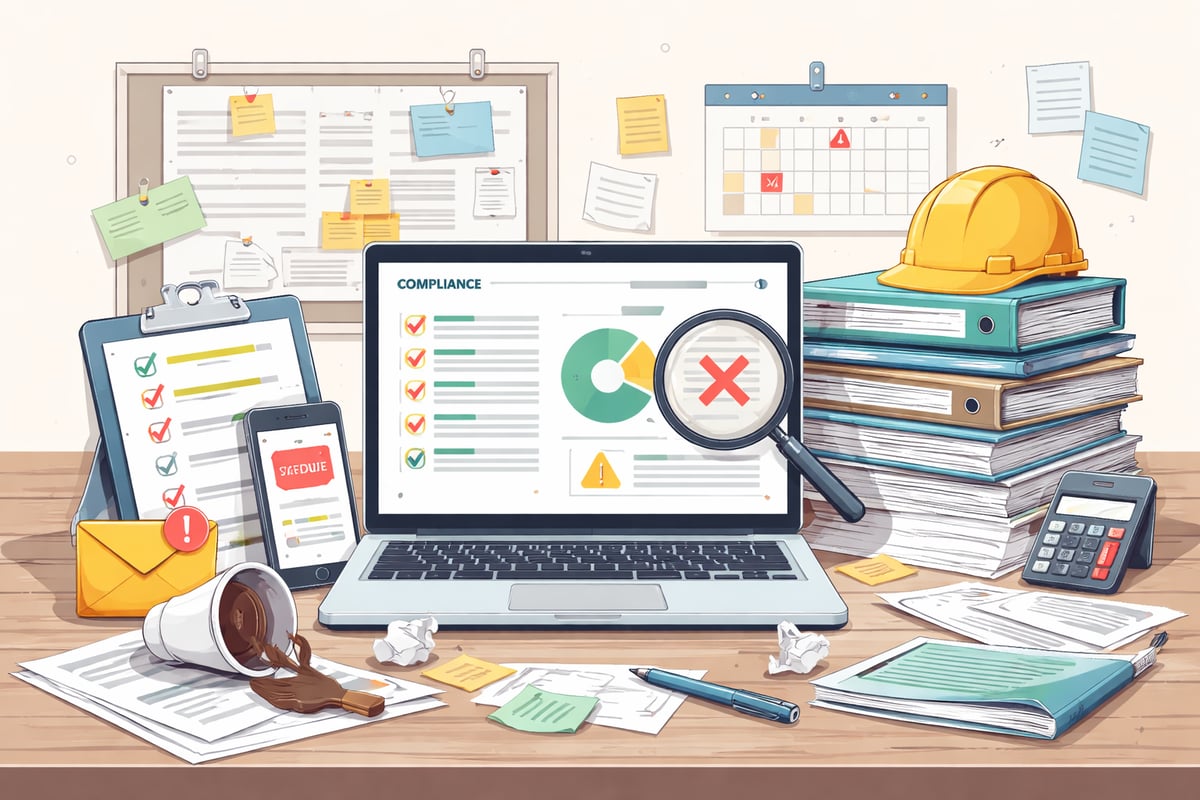
Most companies don’t struggle with safety training because they lack content—they struggle because managing it becomes a full-time job.
On paper, safety training software is supposed to simplify compliance. But in reality, many teams are still juggling spreadsheets, chasing employees, and scrambling before audits. As your workforce grows or spreads across locations, things don’t just get harder—they get messy fast.
So what actually makes safety training software so difficult to manage?
It usually comes down to a few core problems.
The Real Reasons Safety Training Software Becomes Difficult to Manage
Training Is Scattered Everywhere
For a lot of companies, safety training lives in multiple places—spreadsheets, email threads, paper sign-in sheets, and sometimes more than one system.
There’s no single source of truth, which means pulling together a complete training record takes time and guesswork.
That’s where mistakes happen.
There’s No Clear View of Who’s Compliant
Most systems don’t give you a simple, real-time answer to a basic question: who’s compliant right now?
Instead, managers are stuck piecing together information, trying to figure out who still needs training, who’s overdue, and what certifications are about to expire.
Without that visibility, compliance becomes reactive instead of controlled.
Manual Work Creates Gaps
Even with software, a lot of teams are still doing things manually—updating spreadsheets, sending reminders, tracking deadlines.
It works… until it doesn’t.
That’s when deadlines get missed, certifications expire, and small gaps turn into bigger problems.
Audits Turn Into Fire Drills
When an OSHA inspection or internal audit comes up, everything speeds up.
Now you’re pulling records, double-checking completions, and trying to prove compliance across your entire workforce.
If your system isn’t built for it, it turns into a scramble.
Field Teams Don’t Engage With Training
A lot of safety training software wasn’t designed for how field teams actually work.
If training is hard to access, too long, or not mobile-friendly, it gets delayed or ignored.
And when that happens, completion rates drop—and so does real-world safety.
Managers End Up Chasing Everything
Instead of focusing on safety, managers spend their time following up, sending reminders, and trying to track down missing training.
At that point, the system isn’t saving time—it’s creating more work.
So How Do You Fix It?
The issue isn’t more training content. It’s how training is managed.
Modern safety training systems solve this by simplifying the entire process.
They bring everything into one place, give you real-time visibility into compliance, automate assignments and reminders, and make reporting instant instead of reactive.
They’re also built for the field—so training actually gets completed, not ignored.

👉 See what OSHA would see—before they do
Takes 2–3 minutes. No prep. Just a clear picture of where your safety training stands.
Want a more detailed view? You can optionally upload your current training records to see what’s covered, what’s missing, and what to focus on next.
https://pages.vingapp.com/course-compliance-analysis
Where Most Safety Training Software Falls Short
Most traditional systems were built to deliver training—not manage compliance.
They track course completion, but they don’t give you a clear picture of:
- What’s missing
- What’s expired
- What puts you at risk
That’s why so many companies end up relying on spreadsheets and manual processes—even after investing in software.
A Better Way to Manage Safety Training
The right system doesn’t just deliver training—it removes the complexity around it.
It centralizes everything, automates tracking, gives you instant visibility, and creates audit-ready records without extra effort.
Platforms like Ving are built specifically for this—helping teams eliminate manual work, reduce risk, and stay compliant without constantly chasing it.
The Bottom Line
Safety training software becomes hard to manage when it requires more effort than it saves.
If your team is still chasing completions, updating spreadsheets, or scrambling for audits, it’s not a training problem—it’s a system problem.
The fix isn’t doing more.
It’s simplifying how everything is managed.
👉 See what OSHA would see—before they do
Get a quick, clear picture of where your safety training stands—and where gaps may exist.
Takes just a few minutes. No prep required.
Want deeper insight? You can optionally upload your current training records for a more detailed breakdown.



Leave a Comment