
Growth is a good problem to have—until your safety training can’t keep up.
What worked when you had a small team starts to fall apart as you add employees, locations, and more moving pieces. Training becomes harder to track, communication gets messy, and compliance starts slipping in ways that aren’t always obvious right away.
Most companies don’t notice the problem until something forces them to—an audit, an incident, or a missed certification.
If you’re seeing some of this already, you’re not alone. These same issues are often the result of deeper problems with how training is managed in the first place, which is why many companies struggle with safety training software becoming hard to manage long before they realize it. If you’re not sure where your courses and records stand right now, you can get a quick snapshot of your current coverage and gaps with our course compliance analysis.
So why does safety training break down as companies grow?
It usually comes down to a few predictable issues.
Why Safety Training Gets Harder as You Scale
More Employees = More Moving Pieces
Every new hire adds more to manage—training assignments, certifications, onboarding requirements, and ongoing refreshers.
At a small size, you can keep track of this manually or with a simple system.
As you grow, that approach stops working.
Now you’re dealing with different roles, different requirements, and certifications expiring at different times. Without structure, things get missed.
Multiple Locations Create Visibility Gaps
Once you have more than one location or job site, it gets harder to see what’s actually happening.
You might have different managers handling training differently, inconsistent documentation, and delays in reporting completions.
From a leadership perspective, it becomes difficult to answer a simple question: are we fully compliant right now?
If you can’t see it clearly, you can’t control it—and that becomes especially important when preparing for something like an OSHA audit.
Manual Processes Don’t Scale
Spreadsheets, email reminders, and paper records might work early on, but they don’t scale with growth.
They rely on people remembering to update them, managers following up consistently, and information being entered correctly every time.
That’s where gaps start forming.
And those gaps don’t show up until they become a problem—especially when it comes to tracking OSHA training and compliance.
Training Becomes Inconsistent
As teams grow, training delivery often becomes less consistent.
Some employees complete everything on time. Others fall behind. Some locations stay organized. Others don’t.
Without a standardized system, training becomes dependent on individual managers instead of a company-wide process.
That inconsistency creates risk.
Engagement Drops in the Field
As your workforce grows—especially in construction, manufacturing, or field service—training becomes harder to deliver effectively.
Long, hard-to-access courses don’t fit into real workdays.
Employees delay it, rush through it, or skip it altogether.
If you’ve seen this, it’s usually because the system wasn’t designed for how field teams actually work—which is a common reason safety training software fails in the field.
Compliance Turns Reactive
At a certain point, many companies shift from being proactive to reactive without realizing it.
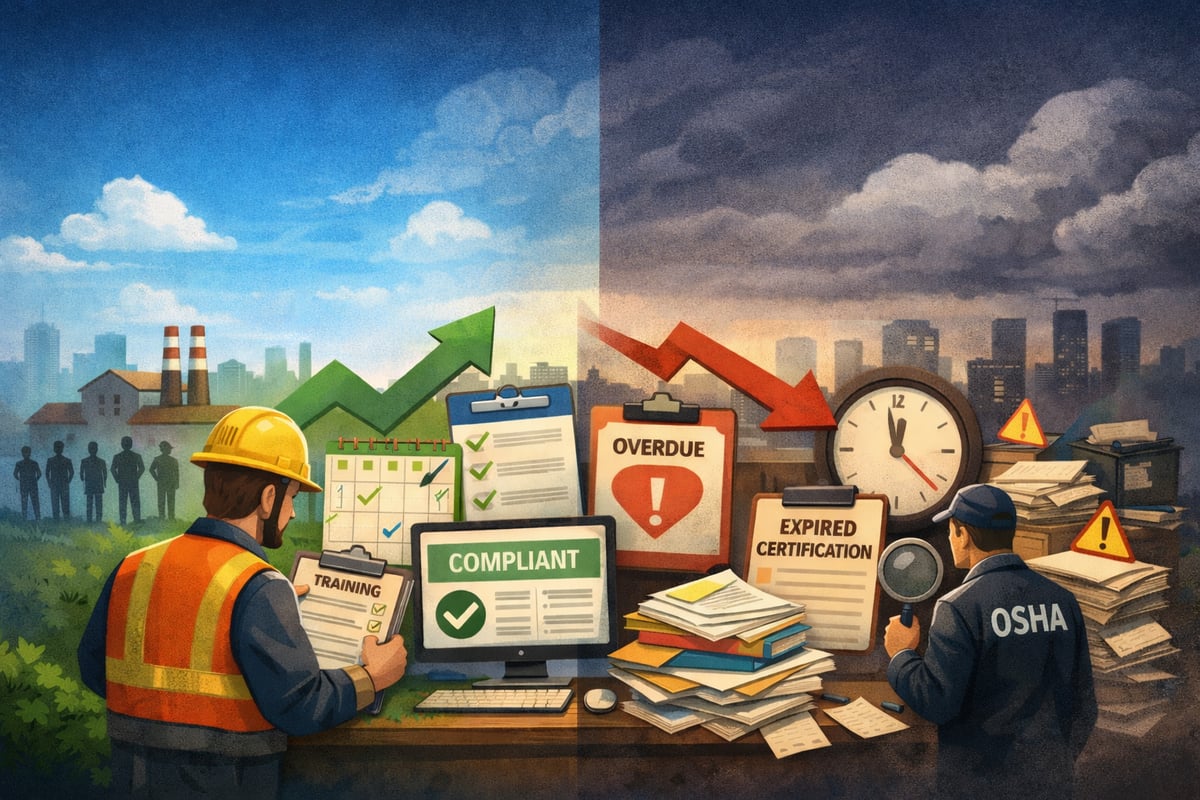
Instead of staying ahead of training, they’re catching up on overdue assignments, fixing expired certifications, and preparing for audits at the last minute.
That’s when safety training stops being a system—and starts becoming a scramble.
How to Scale Safety Training Without Losing Control
Growth doesn’t have to break your training process.
But it does require a shift in how training is managed.
Centralizing everything, standardizing the process, automating assignments and reminders, and having real-time visibility into compliance are what allow companies to stay in control as they grow.
It’s the difference between reacting to problems and preventing them.
👉 See What You Might Be Missing
👉 See what OSHA would see—before they do
Takes 2–3 minutes. No prep. Just a clear picture of where your safety training stands.

Want a more detailed view? You can optionally upload your current training records to see what’s covered, what’s missing, and what to focus on next.
Why Most Systems Struggle at Scale
Most traditional training systems weren’t built for growing, field-driven teams.
They track course completion, but they don’t provide a clear, real-time view of compliance across locations, roles, and timelines.
As companies grow, that gap becomes more obvious—and more costly.
A Smarter Way to Scale Safety Training
The right system doesn’t just deliver training—it scales with your business.
It centralizes everything, automates the busy work, and gives you full visibility into your compliance at all times.
Platforms like Ving are built specifically for this—helping growing companies stay organized, reduce risk, and keep control as they expand.
If you’re not sure where your current process stands, the fastest way to find out is to get a clear picture of your safety training before issues turn into real problems.
The Bottom Line
Safety training doesn’t break because companies grow.
It breaks because the system managing it doesn’t grow with the company.
If your process still depends on manual tracking, inconsistent workflows, or limited visibility, growth will expose those weaknesses.
The fix isn’t more effort. It’s a system designed to scale with you.
👉 Final Step
See what OSHA would see—before they do
Get a quick, clear picture of where your safety training stands—and where gaps may exist.
Takes just a few minutes. No prep required.
Want deeper insight? You can optionally upload your current training records for a more detailed breakdown.
.webp?width=352&name=Blog%20Graphic%20(10).webp)
Leave a Comment