

How to fix common manufacturing safety training problems and prove compliance.
Common safety training problems on the plant floor
Manufacturing has some of the most mature safety programs in industry, yet many safety directors still see the same patterns: repeat injuries around the same machines, inconsistent lockout/tagout practices, and operators who can recite policies in a classroom but fall back into shortcuts on the line. The disconnect isn’t a lack of effort—it’s that traditional training models weren’t built for today’s fast-paced, automated plants or for multi-language, multi-shift workforces.
Common problems start with overload. New hires are often given large amounts of information during orientation—company rules, HR policies, basic safety, and job-specific procedures—before they have any context for how the work actually feels. By the time they reach the floor, they remember only fragments. Ongoing training can be just as challenging: pulling multiple operators off a line for a long class hurts productivity, so sessions get postponed, compressed, or delivered in rushed, lecture-only formats.
There’s also a gap between generic OSHA topics and the very specific hazards at each machine or cell. Operators might attend a high-level annual session on lockout/tagout or machine guarding, but never see how those rules apply to the way they clear jams, change knives, or switch dies on their actual equipment. As a result, they may believe they’re compliant while still relying on dangerous habits passed down informally.
Another challenge is documentation. In a busy plant, sign-in sheets get lost, handwritten names are illegible, and it’s hard to prove training history for a particular employee or job role. That creates real risk during an OSHA inspection, a serious incident, or a customer audit. Without clear records, it’s difficult to demonstrate that required training was completed, let alone that it was effective.
Fixing these problems requires reframing safety training as a continuous workflow, not a one-time event. Instead of relying solely on long annual courses, leading manufacturers are moving toward microburst, task-level training delivered at or near the point of work. Short videos, assessments, and visual job aids on tablets, kiosks, or phones make it easier to weave training into daily operations without shutting down production.
At the same time, companies are standardizing content across locations while allowing for local customization. Core topics—such as hazard communication, lockout/tagout, and ergonomics—are aligned with OSHA and best-practice guidance from organizations like NIOSH, while examples and photos are drawn from each facility. This balance keeps training both compliant and relevant, which is essential if you want to strengthen safety culture and reduce injuries on the plant floor.
Designing training that changes worker behavior
Traditional manufacturing safety training often fails at the moment when it matters most: on the line, in front of the machine, or inside a cell changeover. Long classes and annual “safety days” check the compliance box, but they don’t always change how work is performed when production pressure is high. To shift from awareness to real behavior change, your program has to be designed around how adults learn and how manufacturing work actually happens.
Start by tightening the link between hazards, controls, and the training workers receive. Use tools like the NIOSH Hierarchy of Controls, explained clearly in resources such as this overview of the NIOSH Hierarchy of Controls, to structure your content. Emphasize eliminating and engineering out hazards first, then reinforce the role of procedures and PPE. When training mirrors this hierarchy, operators understand why guards, interlocks, and lockout/tagout steps are non‑negotiable—not just rules to work around.
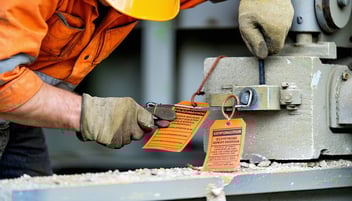
Next, design training in short, focused modules that answer three questions for each task: What can hurt me? How does this equipment or process control that hazard? What are the critical steps I can never skip? A 10‑minute micro‑lesson on lockout/tagout that references OSHA’s guidance at OSHA’s Lockout/Tagout fact sheet, followed by a quick hands‑on demo at the machine, will outperform a one‑hour classroom lecture every time.
Real incident stories are powerful, especially when they come from your own plant or industry. Incorporate near‑misses and lessons learned into your content. For example, if a jam‑clearing shortcut nearly resulted in an amputation, build a micro‑lesson around what happened, what should have happened, and how the right sequence of steps prevents a recurrence. When workers see real consequences attached to familiar tasks, they’re more likely to pause before bypassing a guard or skipping a step.
Finally, remove friction from access. If your LMS is difficult to log into or doesn’t work on the floor, operators will only use it when forced. Instead, bring training to where people are: QR codes on machines that launch task‑specific videos, tablets at cells, or mobile‑friendly links delivered by text or email. That way, supervisors can pause for a five‑minute refresher before a non‑routine job or after a near‑miss, instead of waiting for the next scheduled class.
Tracking, reporting, and proving manufacturing compliance
Designing great training is only half the battle. To reduce risk, defend against citations, and earn leadership buy‑in, safety directors must be able to show that training is both completed and effective. That requires reliable tracking, reporting, and visibility across shifts, departments, and locations.
First, centralize your training records. Move away from scattered spreadsheets, paper sign‑in sheets, and siloed systems. A digital training and compliance platform lets you assign courses by job role, track completions automatically, and maintain an audit‑ready record of who was trained on what, and when. When OSHA or a customer auditor asks for proof of lockout/tagout or machine guarding training, you can pull a clean report in minutes instead of days.
Next, go beyond completion counts and measure engagement and understanding. Microburst training with built‑in questions, short quizzes, or interactive checks for understanding gives you data you can act on. If a particular topic—say, powered industrial truck procedures or chemical handling—has low scores, you can schedule targeted refreshers, coach specific teams, or update confusing content. Articles like this piece on optimizing manufacturing worker safety training highlight how verifying effectiveness is just as important as delivering the training itself.
Digital platforms also make it easier to align training with your broader safety strategy. You can map courses to hazards identified in your risk assessments, link them to corrective actions from incident investigations, and attach certificates or course histories to employee records. Dashboards that show completion rates by department, overdue or expiring training, and high‑risk gaps help EHS leaders and plant managers prioritize where to focus.
Finally, use your data to tell a story. When you can tie increased training completion and knowledge scores to reductions in injuries, near‑misses, or OSHA recordables, leadership sees training as an investment, not an expense. That support makes it easier to justify additional content, supervisor time, or tools like Ving that automate distribution, reminders, and reporting. Over time, a data‑driven, microburst‑powered program builds a culture where workers expect regular, relevant safety training—and where “we didn’t know” is replaced with “we’re trained and ready.”
-4.jpg?width=352&name=blog%20image%20(1)-4.jpg)
Leave a Comment